Engage
A behaviour-assessed companion dog helps lower the pressure and creates a reason to take the first step.
Practical. Relational. Evidence-informed. The Baxter Project helps children who may not respond to traditional support begin to trust, communicate, regulate and re-engage—alongside a carefully assessed companion dog.
The Baxter Project creates a safe route into support for pupils facing trauma, anxiety, bereavement, neurodiversity, school avoidance and barriers to learning.
A behaviour-assessed companion dog helps lower the pressure and creates a reason to take the first step.
Skilled practitioners use relationship-led, trauma-informed work to understand what sits beneath behaviour.
One-to-one sessions build regulation, communication and achievable routes back into learning and relationships.
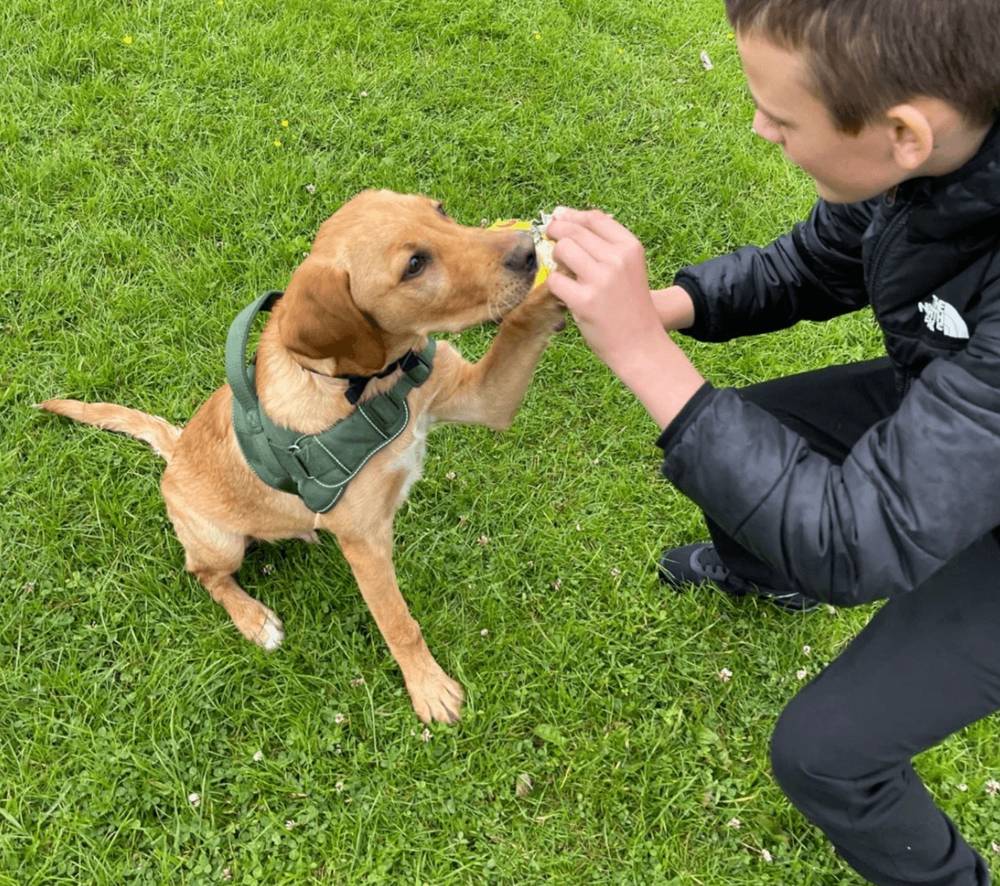
We work with children experiencing anxiety, adversity, bereavement, neurodiversity, school avoidance, exclusion risk and wider social, emotional and mental health needs. Our approach is practical and relational — it helps children begin to trust, communicate, regulate and re-engage.
Grounded in the Skuse and Matthews Trauma Recovery Model, every session is built around the same progression — met with patience, skill and trust.
The companion dog gives children a non-judgemental presence to build safety and trust before anything else is asked of them.
Once safety is established, children begin to find language — verbal or otherwise — for what they are experiencing.
Practitioners support children to recognise and manage their emotional and physiological state in the moment.
With trust and regulation established, children are supported back into classroom life and peer relationships.
Every element of delivery is grounded in the Trauma Recovery Model, developed with academic partnership.
Delivered in partnership with over 100 schools, working alongside existing pastoral and SEND provision.
Talk to TAG about referrals, delivery capacity, safeguarding and what a Baxter Project cohort could look like in your setting.